
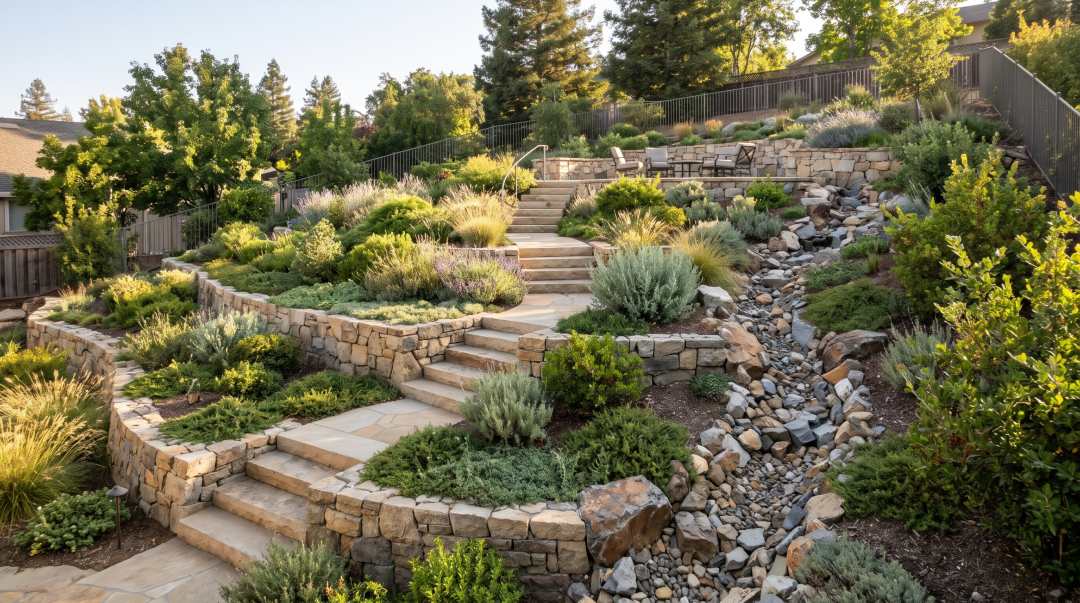
A backyard that loses soil after every storm needs more than new plants or a patio. To landscape a steep or sloped backyard, manage runoff first, stabilize the ground, and then create safe, usable spaces.
This guide explains how to assess the grade, choose professional help, plan drainage, and combine planting with terraces, paths, or decks.
Five Landscape Professionals to Research in Santa Clara County
A hillside project may need several specialties rather than one contractor. Use these five entries as a research checklist, not a quality ranking, and compare licensing, insurance, slope-design experience, drainage plans, and engineering coordination.
1. Need for Build, Inc.
Need for Build North CA serves Sunnyvale and Santa Clara County, with a Sunnyvale office at 1358 Warner Ave. It brings design and construction under one company.
Need for Build, Inc. holds active California Contractors State License Board (CSLB) license #1043623, with B General Building Contractor and C27 Landscaping classifications, through August 31, 2028. It is licensed and bonded, with workers’ compensation coverage on file through January 1, 2027.
2. Local Design-Build Landscape Contractor
Look for documented grading, retaining-wall, drainage, and safe-access work. Request plans showing runoff routes, planting shelves, and machine access before a tractor or grading blade enters the yard.
3. Landscape Architect With Hillside Experience
A landscape architect can organize functional zones, vegetation for screening, and circulation. Ask about local ordinances, storm-system connections, and engineering coordination.
4. Civil or Geotechnical Engineering Partner
An engineer can evaluate clay soils, groundwater, wall loads, and slope movement. Nearby excavation or water approaching foundations deserves particular attention.
5. Native-Plant and Erosion-Control Specialist
Seek expertise in drought-tolerant plants, deep-rooted plants, and establishment irrigation. Planting supports erosion control but cannot repair a failing slope.
For background on managing rainfall near its source, consult the EPA’s Soak Up the Rain guidance.
Start With a Site Assessment, Not a Design Style
Measure the vertical drop and horizontal run, then calculate slope as rise divided by run, multiplied by 100. A four-foot drop across 20 horizontal feet equals a 20% slope; a slope calculator can help check the arithmetic.
Use a level and the stake-and-string method for preliminary measurements where access is safe. Steep or complex sites may need a professional survey.
Map soil type, sun, shade, trees, fences, buildings, drainage outlets, and utilities. Record existing railroad ties or walls, particularly where they lean, rot, or hold back soil.
Watch rainfall from a safe location to identify sheet flow, gullies, ponding, and water moving toward the house. Contact 811 before digging, and ask whether privately owned utility lines need separate locating.
Identify When Professional Review Is Needed
Bring in qualified professionals for substantial grading, retaining structures, persistent drainage failures, or signs of movement such as cracking and bulging ground. Check permits before constructing walls or stairs; in San José, a pool or water-containing structure more than 18 inches deep that is intended for swimming or recreational bathing requires a building permit.
A landscape designer can develop planting and low-volume irrigation systems, but structural instability requires the appropriate engineering expertise.
Solve Water Runoff Before Moving Soil
Keep runoff from concentrating into fast channels that scour soil and undermine paths or walls. Direct water away from foundations toward a lawful, stable discharge location without increasing concentrated flow onto neighboring properties.
Combine surface shaping, planted cover, and appropriately sized drainage components. Compost can improve planting soil in suitable locations, but neither soil amendments nor soaker hoses solve uncontrolled stormwater.
Use Surface Drainage to Slow and Spread Water
Shallow swales, dry creek beds, gravel beds, and permeable surfaces can help manage runoff when designed for the site. Permanent drainage channels need enough capacity and protection against erosion.
Properly designed check dams can reduce channel velocity. Use appropriately sized, stable angular rock where movement resistance matters; loose decorative river rock may shift during heavy flow.
Add Subsurface Drainage Only With a Clear Outlet
A French drain or drainage tile needs suitable slope, drainage stone, filter protection, and an approved outlet. Channel or trench drains intercept surface water but still require somewhere safe to discharge.
Dry wells suit only locations with appropriate infiltration conditions and local approval. Do not bury a drainage problem beneath topsoil or landscape fabric.
Choose the Right Way to Shape the Slope
Preserving the existing grade with erosion-control planting is often less disruptive than regrading. Terracing creates flatter slope bands for seating, gardening, or a play area, while cut-and-fill work requires careful compaction and stability planning.
Ask how the cut-and-fill balance affects exported soil, imported material, and equipment access. Even modest-looking changes can involve substantial cubic yards of earth.
Use Terraces and Retaining Walls Strategically
Several shorter terraces may fit the landscape better than one tall wall, although closely spaced walls can affect one another structurally. Wall height, nearby buildings, and loads above the wall influence engineering and permit requirements.
A retaining system needs suitable base-course preparation, gravel backfill, drainage, and reinforcement where specified. Interlocking concrete blocks, geogrid, and stepping a retaining wall base must follow the engineered design and manufacturer’s requirements.
Consider Decks on Posts for Difficult Terrain
A deck on posts can provide a level area without extensive excavation. Coordinate foundations, railings, stairs, and drainage so water does not concentrate beneath it.
Where fill supports construction, an engineer should specify compaction testing rather than assuming “95% of Standard Proctor” suits every application.
Build Safe Routes Through the Backyard
Plan circulation before positioning a fire pit, garden, or focal point. A beautiful destination has limited value if reaching it means crossing loose soil or a slippery incline.
Separate manageable DIY projects, such as planting beside an established path, from structural stair or retaining-wall construction. Plan space for material deliveries, a dumpster if needed, and future maintenance access.
Design Steps, Landings, and Switchbacks
Use consistent risers, adequate tread depth, and stable footing that meets applicable code. Landings break up long stair runs and provide resting points.
Switchbacks can reduce path steepness where space allows, but they do not automatically create an accessible route. Account for shaded microclimates where fallen leaves, leaf mold, or algae may keep surfaces slippery.
Keep bark chips out of stair treads and use properly contained drainage stone beside, rather than loose across, walking surfaces.
Use Railings and Edging Where Needed
Provide handrails and guards where required or where fall risks warrant them. Edge a gravel or stepping stone walkway to limit downhill migration.
Respect the mower manufacturer’s mowing limit; replace unsafe-to-mow areas with suitable planting instead of forcing lawn onto steep ground.
Plant for Erosion Control and Low-Maintenance Coverage
Choose plants for sunlight, soil moisture, slope aspect, and climate rather than appearance alone. Groundcovers, ornamental grasses, perennials, shrubs, and suitable trees provide varied root systems and coverage.
Group plants with similar watering needs and use low-volume drip irrigation during establishment. Coarse mulch can protect soil, but bark chips and other loose materials may migrate on steep grades.
Select Plants That Hold Soil in Place
Research climate-appropriate native plants alongside options such as creeping juniper, phlox, and sedums. Green and Gold suits some shaded locations, while bluestem grasses suit particular sunny sites; neither belongs everywhere.
Deep-rooted shrubs and dense clumping plants can complement spreading groundcovers. Choose flowering species that support pollinators and wildlife, and check invasive-plant guidance before using ivies or Asian jasmine.
Protect New Plantings During Establishment
Use an erosion blanket, jute, coir, or properly installed wattles where appropriate. Avoid exposed open plastic netting that can entangle wildlife, and distinguish clean straw mulch from seed-bearing fresh hay.
Position each root ball correctly; compacted planting holes can stunt root development. Inspect after storms for exposed soil, displaced mulch, and blocked drains.
Create Usable Zones Without Fighting the Grade
Place activities on naturally flatter ground or compact terraces rather than leveling the entire property. An upper seating area or pergola can capture views, while a lower rock garden or habitat planting can reduce mowing.
Keep trees and large shrubs far enough from retaining structures to avoid foreseeable conflicts. Boston ivy and other vigorous climbers also need placement that preserves access for inspection and maintenance.
A waterfall needs waterproofing, recirculation, overflow planning, and safe maintenance access. It should not become an uncontrolled source of water within the slope.
Example Layout for a Moderate Backyard Slope
- Top zone: Place a patio near the house, with surface drainage directed away from the foundation.
- Middle zone: Connect one or two planted terraces with consistent steps and landings.
- Lower zone: Use deep-rooted planting beside a designed dry creek bed or controlled runoff route.
Determine whether a mini excavator, box scraper, or material lift systems can reach the work area before finalizing construction details. In climates with freeze-thaw cycles, specify foundations, paving bases, and drainage accordingly.
Avoid Common Sloped-Backyard Mistakes
Do not build a rock wall or block retaining wall without addressing water behind it. Temporary bracing is not a substitute for a permanent structural design.
Avoid grading soil toward the house or treating neighboring land as a drainage outlet. Set grade stakes from an agreed plan so excavation follows intended elevations.
Do not depend on loose mulch, shallow-rooted turf, or decorative stone alone to control erosion. Likewise, hydroseeding and burlap may help establishment in suitable applications, but they do not correct unstable ground.
Plan equipment access, deliveries, and future repairs before excavation. A professional maintenance crew should be able to reach drains, irrigation components, and planted terraces safely.
Key Takeaway
Manage water first, stabilize soil second, and add usable spaces and planting afterward. A phased plan can address urgent drainage and erosion before aesthetic upgrades.
Heavy equipment is not always necessary: lightly tilled planting pockets and appropriate organic matter may suffice on stable, modest slopes. A bulldozer belongs only where the grading plan, access, and site conditions justify it.
Frequently Asked Questions
These answers help distinguish planting projects from work that needs structural or drainage expertise.
What Is the Best Way to Landscape a Steep Backyard?
Start by mapping runoff, soil conditions, and the grade. Combine drainage, suitable planting, terraces, or retaining structures according to slope stability and how you want to use the yard.
How Do You Stop Erosion on a Sloped Backyard?
Slow concentrated runoff, protect bare soil, and establish suitable deep-rooted plants. Vulnerable areas may also need erosion-control blankets, check dams, terraces, or engineered stabilization.
Do I Need a Retaining Wall for a Sloped Yard?
Not always; planting, swales, and modest reshaping can work on stable, gentler slopes. Walls become useful when holding back soil or creating level areas, but their loads and location may trigger engineering and permits.
What Plants Are Good for a Steep Slope?
Choose dense groundcovers, clumping grasses, shrubs, and native plants suited to local sunlight, soil, and moisture. Combine plant types rather than relying on one shallow-rooted species.
Can I Landscape a Sloped Backyard Myself?
Small planting and surface-protection projects may suit experienced homeowners on stable ground. Get qualified review for major grading, drainage connections, retaining walls, electrical work, and construction near buildings.