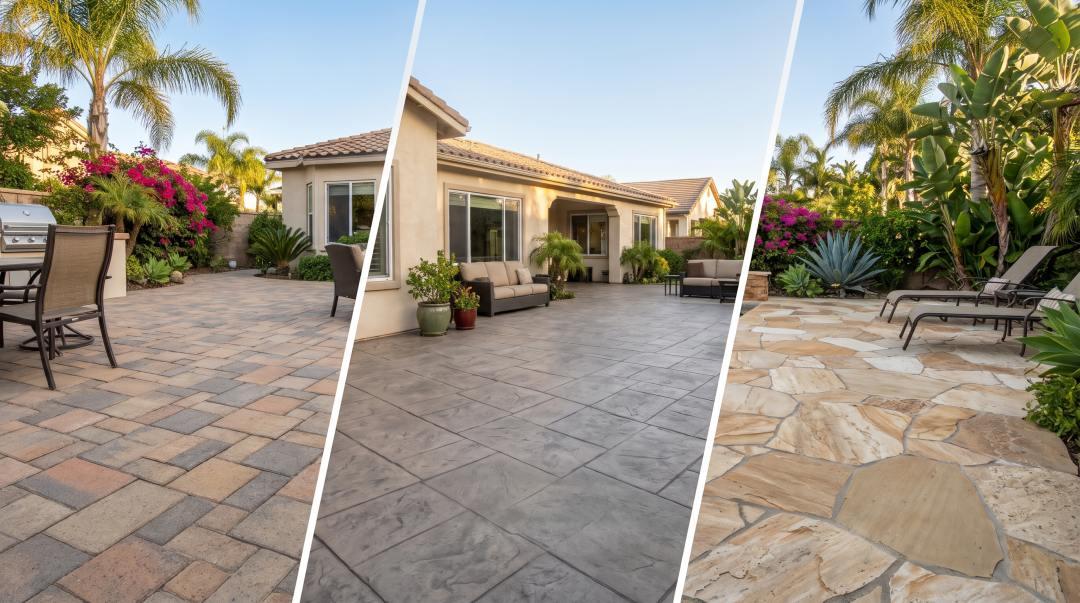
Choosing a San Diego patio means balancing appearance, repair costs, and site conditions. When comparing pavers vs stamped concrete vs natural stones, start with drainage, sun exposure, and intended use rather than color alone.
Use this contractor shortlist and material guide to compare installation scope, maintenance, and long-term fit.
5 San Diego Patio Companies to Consider
Start with these San Diego-area companies, then confirm service for your address and request comparable proposals; listing order is not a quality rating.
1. Need for Build
Include Need for Build first in your patio consultation shortlist. Ask for material recommendations, drainage planning, and a written estimate covering the proposed outdoor-living scope.
2. Install-It-Direct
Consider this paving and outdoor-living contractor for a paver-focused proposal. Compare base preparation, edge restraints, and repair provisions.
3. System Pavers
Consider this outdoor-living company for modular paving options. Compare layouts, finish choices, and installation scope.
4. Pacific Dreamscapes
Consider this landscape contractor for a patio coordinated with surrounding landscaping. Compare grading, planting interfaces, and drainage.
5. Western Outdoor Design & Build
Consider this outdoor-remodeling company for a broader backyard project. Compare patio scope and coordination with other features.
For each, request relevant portfolio examples, current licensing details, review profiles, and written estimates; discuss tree roots, circular designs, material sustainability, and heavy loads.
How the Three Patio Materials Compare
Pavers prioritize repairability, stamped concrete creates a continuous decorative surface, and natural stone offers distinct material character. Soil conditions, slope, access, sun exposure, and drainage can outweigh appearance.
Concrete pavers combine cement, aggregate, and pigment; stamped concrete is generally a single slab, while stone characteristics depend on the quarry and finish.
At-a-Glance Comparison Table
These are relative planning estimates, not local price quotes.
| Factor | Concrete pavers | Stamped concrete | Natural stone |
|---|---|---|---|
| Installed cost | About $15 to $25 per sq ft in Modern Yardz's San Diego estimates | About $14 to $20 per sq ft in Modern Yardz's San Diego estimates | About $25 to $40 per sq ft for travertine and natural stone in Modern Yardz's San Diego estimates |
| Lifespan | Base and maintenance dependent | Slab and exposure dependent | Stone and installation dependent |
| Repairs | Lift and reset units | Patches may remain visible | Reset or replace pieces |
| Maintenance | Joint maintenance | Sealer maintenance | Stone-specific care |
| Wet traction | Texture dependent | Texture and sealer dependent | Finish dependent |
| Design | Modular patterns | Stamps and colors | Natural variation |
| Downtime | Base and joint-system dependent | Curing time required | Setting-system dependent |
Price materials separately from demolition, excavation, backfilling, base preparation, drainage, access, and labor. Store extra materials for replacement.
Concrete Pavers: Flexible, Repairable, and Design-Forward
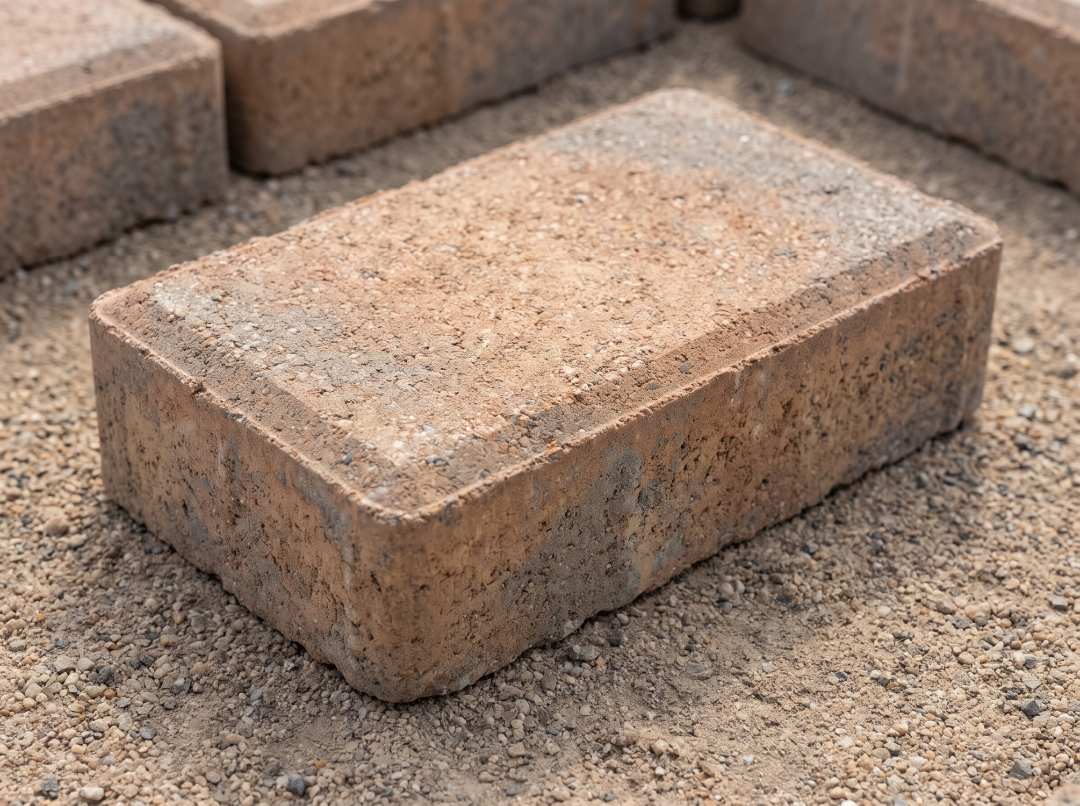
Concrete pavers are individual interlocking units laid over a compacted gravel base and sand bedding layer. Herringbone, running bond, basketweave, and mixed-size patterns accommodate borders and inlays.
Because pavers consist of individual units, damaged areas can usually be removed and replaced without demolishing the entire patio.
Their practical advantage is selective repair: units can be lifted after settling or utility work rather than replacing a slab. The Interlocking Concrete Pavement Institute provides technical guidance on interlocking concrete pavement construction.
Maintain joint sand and edge restraints; use polymeric sand where compatible. Sealing is optional for some products, and color variation or fading can occur.
Best Uses for Pavers in San Diego
Choose pavers for future utility access, modular designs, or sites where minor ground movement is a concern. A properly graded subgrade, thorough compaction process, and drainage plan matter more than antiqued finishes or advertised compressive strength alone.
Stamped Concrete: Continuous Style With Lower Initial Complexity
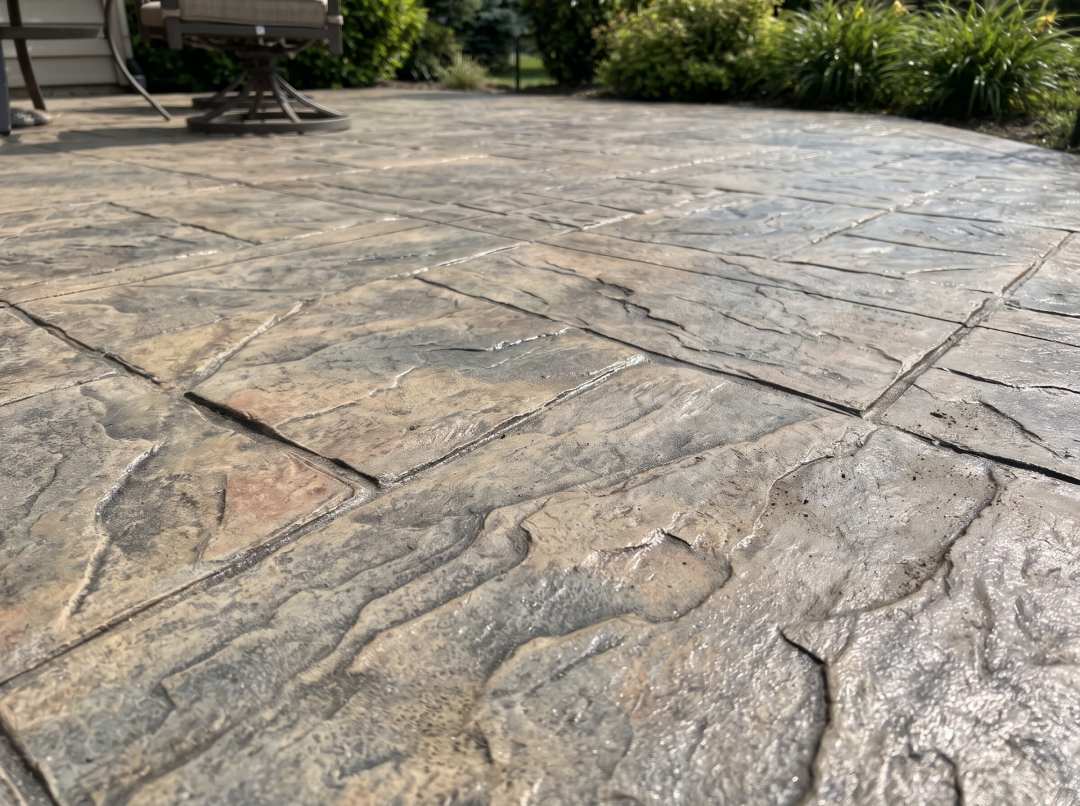
Stamped concrete is a poured slab textured and colored to resemble slate, cobble, wood planks, or other surfaces. Options include custom stamps, texture skins, seamless stone-like textures, integral color, dry-shake color hardeners, release color, concrete stains, and dyes.
Unlike modular pavers, a poured concrete slab forms one continuous base, so movement or cracking in one area can affect the surrounding surface.
Control joints help manage cracking but do not eliminate it. Curing time, sealing, staining, surface abrasion, and drainage affect performance; crack repairs can be difficult to blend into the pattern.
Ask the contractor about the concrete mix, including its intended strength, aggregate, water content, and additives, because mix design affects durability and finishing. Site preparation, reinforcement, curing, and joint placement also influence how the slab performs.
When Stamped Concrete Makes Sense
Choose it for simple, unified layouts without individual paver joints, including ashlar slate patterns or a hand-tooled border. Checkerboard coloring and decorative inlays add complexity.
For San Diego patio planning, Modern Yardz lists broom-finish concrete at about $8 to $12 per square foot and stamped concrete at about $14 to $20 per square foot. Avoid treating decorative crack repairs as straightforward DIY repairs, and keep traffic off until the installer authorizes use.
Natural Stone: Premium Character and Natural Variation
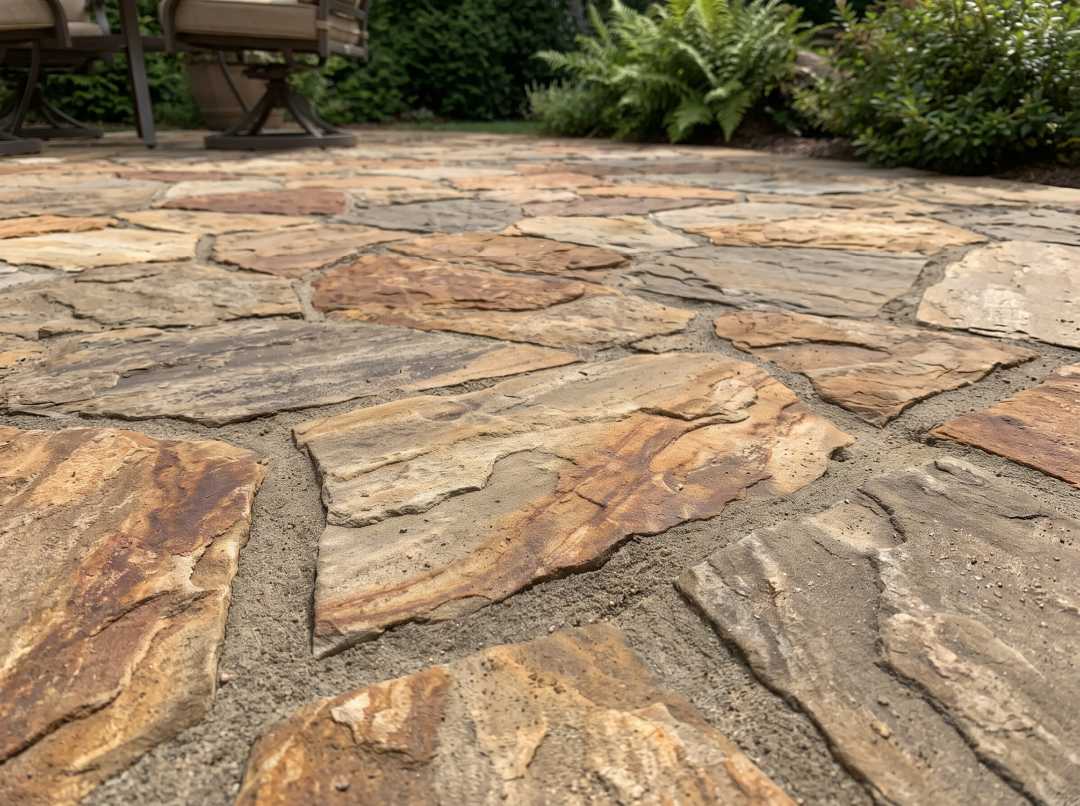
Quarried stone offers inherent veining, color variation, and irregular or precisely cut shapes. Flagstone describes paving slabs rather than one geology; bluestone, travertine, limestone, granite, slate, and sandstone have different properties.
Moisture absorption, porosity, thickness, texture, and sealing needs vary by product. Cutting and fitting increase labor, while mortar-set and dry-set installations require different foundations and repair methods.
Choosing Stone for Sun and Poolside Use
Inspect actual samples wet and dry, including in direct sunlight, to assess glare, traction, and heat underfoot. Color alone does not establish a comfortable surface temperature.
Ask whether the selected stone tolerates heavy foot traffic and temperature swings. Uneven cleft surfaces can complicate furniture placement, while polished finishes may become slippery when wet.
Cost, Installation, and Long-Term Maintenance
Compare total project cost, not material pricing alone. Design complexity, excavation, demolition, grading, drainage and pitch, base depth, cutting, access, and labor all affect estimates.
Pavers can be releveled, stamped concrete may need visible patches or compatible overlays, and stone can often be reset or replaced. Sweep regularly, clean with mild detergent, and pressure wash only at settings appropriate for the surface and joints.
Reseal when the material and sealer system require it, not automatically every year. Ask about deicers if the property experiences freezing conditions.
Why Drainage Is a Non-Negotiable
Every patio needs planned drainage away from structures and a properly prepared base or slab foundation. Poor drainage can cause erosion, settling, shifting, staining, moss, and premature deterioration; displaced surfaces can become a trip hazard.
Which Patio Material Is Best for Your Project?
Choose pavers for repairability and modular design, accepting joint maintenance and possible color fading. Choose stamped concrete for a continuous decorative surface, accepting that cracks may remain noticeable.
Choose natural stone for authentic variation when higher initial cost and installation complexity fit your priorities. Request itemized estimates defining demolition, material allowances, base preparation, drainage, sealing, and repair terms.
The Practical Verdict for San Diego Homeowners
There is no universal winner or guaranteed resale value advantage. Compare physical samples and completed local projects against your budget, sun exposure, and maintenance preferences.
For colored concrete, review integral color and color hardener samples; for sealed surfaces, ask whether compatible grit is appropriate for traction. Select the installation system first, then finalize the finish.
Frequently Asked Questions
These answers help translate material preferences into a practical project budget.
How Much Does It Cost to Install 1,000 Square Feet of Pavers?
Multiply a detailed local installed-per-square-foot quote by 1,000; a hypothetical $25 quote would total $25,000. Confirm whether excavation, base depth, drainage, cutting, access, labor, and finishing are included.
What Kind of Pavers Look Like Natural Stone?
Tumbled concrete pavers, textured surfaces, and irregular-edge or multisize collections can resemble flagstone, travertine, slate, or cobble. Review samples outdoors because sunlight changes their apparent color and texture.
What Is Better, Concrete or Pavers?
Neither is universally better: pavers are generally easier to relevel and repair, while concrete provides a continuous surface. Budget, drainage, foundation preparation, appearance, and maintenance preferences should guide the choice.
Is Brushed Concrete Cheaper Than Stamped Concrete?
Modern Yardz's San Diego estimates place broom-finish concrete at about $8 to $12 per square foot and stamped concrete at about $14 to $20 per square foot. Slab preparation, thickness, reinforcement, access, and project size still affect the final price.
A durable San Diego patio starts with site preparation, not a pattern choice. Compare written scopes and drainage plans before choosing the material that best fits your home.