
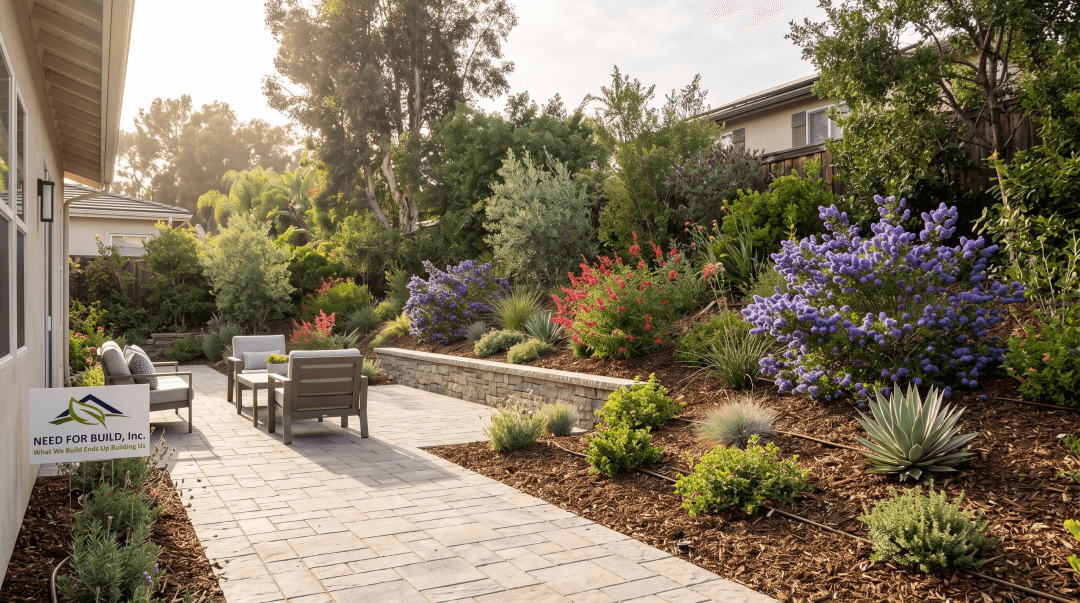
You probably already know what you want the finished yard to look like. That's the easy part. Drainage, water use, permits, and the order things get built in are what decide whether that picture actually works, and getting them wrong after demolition starts is expensive.
Local examples help. The San Altos Elementary School Demonstration Garden is a good place to see perennials like yarrow in real conditions, and the region's botanical gardens and arboretums open to the public show how native plants and climate-adapted species mature over years, not weeks. But no demonstration garden knows your lot. Your plan still has to come from your site conditions, the Landscape Standards that apply to you, how you'll use the space, and how much maintenance you're honestly willing to do.
Start With Your Goals, Budget, and Site Assessment
Good landscaping starts before anyone swings a pick, buys a plant, or sends a bid. Decide first what the yard is for. Low-maintenance landscaping? Room for kids? Entertaining? Dogs? Habitat and biodiversity? Curb appeal? A usable outdoor living space? Each of those is a functional use, and each pushes the design somewhere different.
Then build an all-in budget. Not just plants and pavers. Include design and site assessment, a CAD plan if the project is complex, permits, demolition, grading, hardscape, plants, landscape lighting, drainage, and the irrigation system. Add ongoing landscape care, and hold back 10 to 15% as contingency for whatever is hiding under the old lawn. Ask your designer for a construction cost estimate tied to the drawings, so you're not guessing.
Talk through whether you want an automatic irrigation system and how future upgrades will plug into it. A code-compliant design connects budget, site limits, and function. It doesn't treat each feature as a separate shopping trip.
Evaluate Conditions on the Property
Walk the property at different times of day. Note sun and shade, soil, slopes, where water runs now, mature trees, utility locations, equipment access, and what you see from inside the house. Visual access matters more than people expect; you'll look at this yard through windows far more often than you'll stand in it.
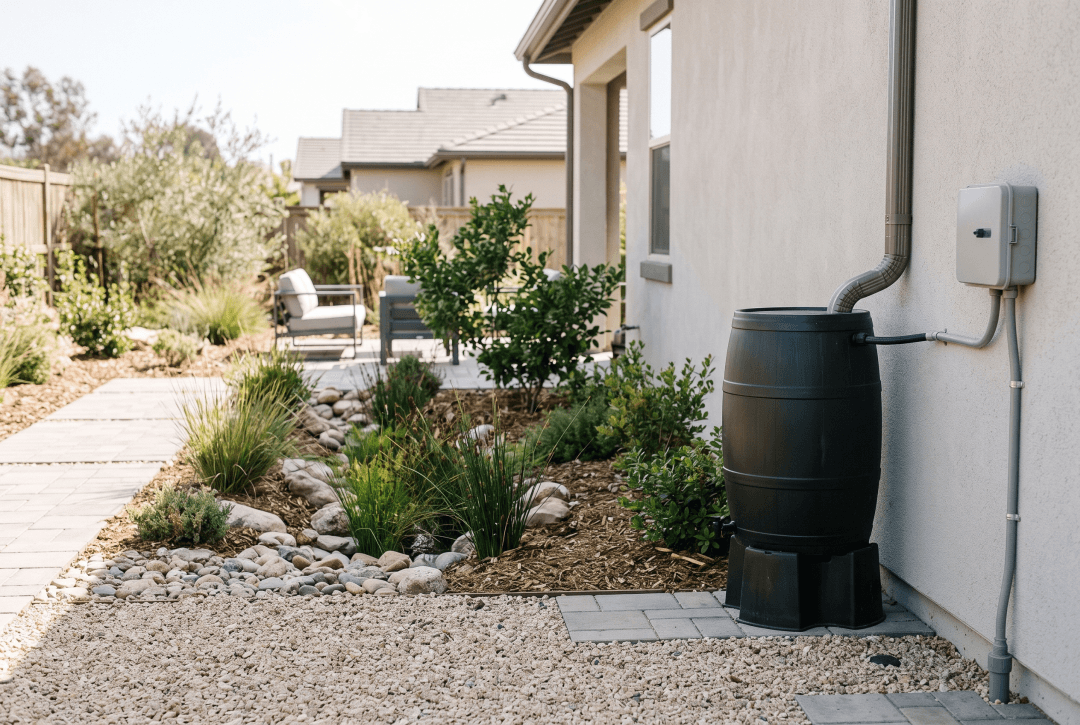
Soil testing can reveal drainage limits or the amendments a bed actually needs. Look for soil erosion, standing water, staining, and signs of past flooding. Rain barrels and other rainwater capture features can catch roof runoff, but the overflow still needs a safe route away from your foundation and your neighbor's yard.
Steep hillsides, recurring water problems, unstable ground, or any sign of significant soil movement means stop and call a professional. You may need a drainage study, civil engineering input, or a geotechnical study before the layout is final. It's cheaper than finding out the hard way.
Create a Phased Landscape Plan
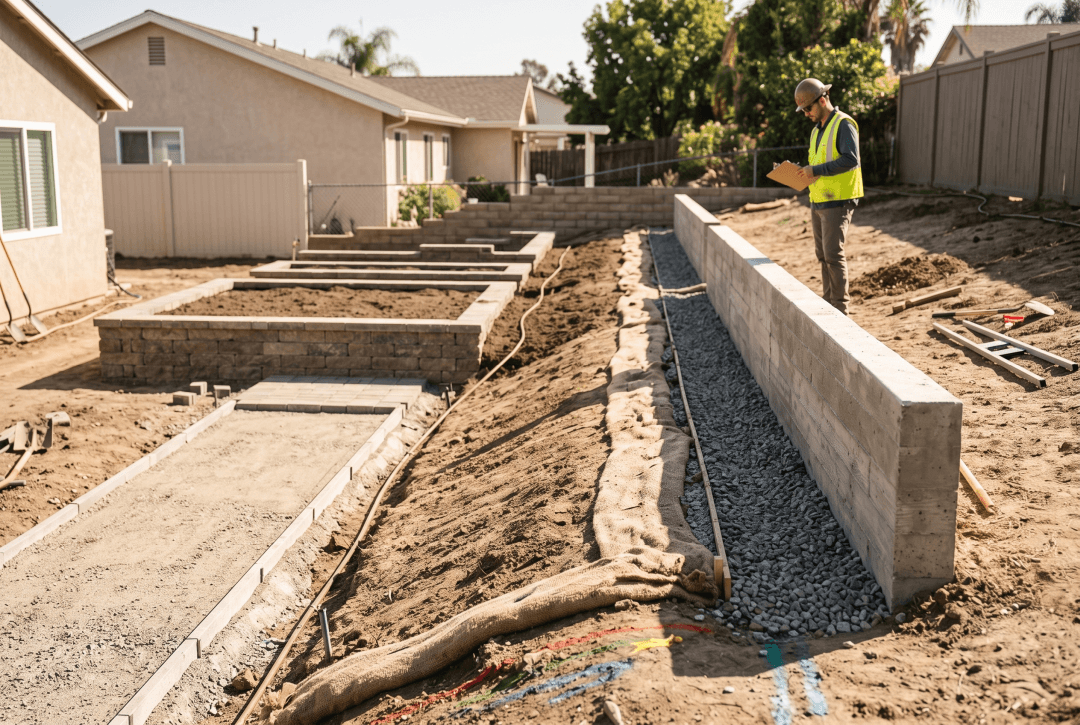
Do the permanent, site-dependent work first: drainage, grading, retaining walls, utility runs, irrigation sleeves, patios, and paths. A landscape architect or qualified designer can turn that into a master plan so later phases don't fight earlier ones.
After that, planting, landscape lighting, a pergola, or an outdoor kitchen can go in without tearing anything out. Plan for pull boxes and conduit for lighting and irrigation wiring now, even if the fixtures come later. The plan should also say where landscape fabric belongs. In plenty of planting beds it gets in the way of soil improvement and natural reseeding.
Ecological restoration projects that rely on temporary systems instead of permanent irrigation are a different animal. They're built to establish a permanent, long lived plant community and then wean it off water. Don't copy those methods into a residential garden without thinking about establishment, erosion control, and site ecology.
Design for San Diego's Climate and Water Limits
San Diego's Mediterranean climate means dry summers and wetter winters. That's the headline. The details vary a lot. Coastal beaches and sensitive coastal bluffs deal with salt spray and wind. Coastal terraces stay mild. Inland valleys and foothills get real heat and colder nights. The county spans roughly USDA Hardiness zones 8 to 10, and your own yard can have three microclimates in it. Design for the spot where each plant is actually going.
A water-wise landscape groups plants by need instead of watering everything the same. Those groups are called hydrozones. Each hydrozone area holds plants with a similar plant factor, so high water using plants, medium water using plants, and low water users never share a valve. The County's Water Efficient Landscape Design Manual and the ideas in San Diego Conceptual Native Garden Design are both worth reading for zoning, irrigation, and plant selection.
The numbers behind this start with evapotranspiration. Look up your Average Annual ETo on the ETo Map in the County manual, because it drives how much water your landscape is allowed and how much it actually needs. Inland sites run higher than the coast.
Drought-tolerant plants are not maintenance-free. New plantings still need establishment water. Long term, you're looking at pruning, weeding, mulch renewal, irrigation checks, and seasonal inspections. Less work, yes. No work, no.
Choose Plants for Exposure, Scale, and Fire Safety
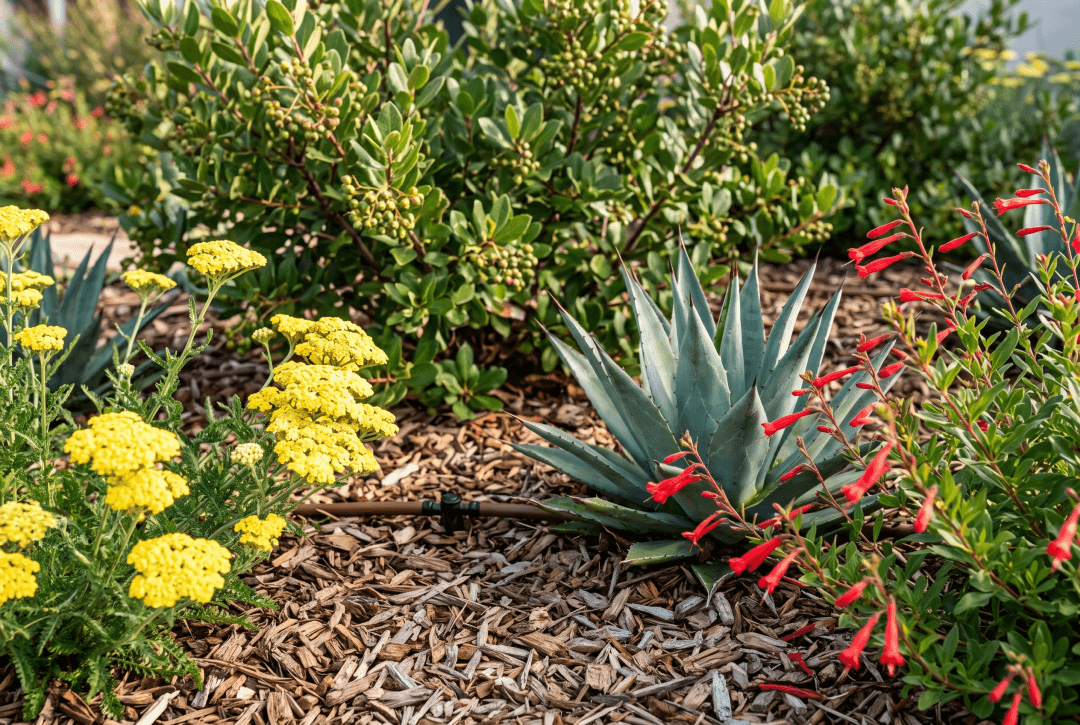
Pick native plants and climate-adapted plants based on mature plant size, soil, sun, pollinator value, and distance from the house. Depending on the site, good options include California lilac (Ceanothus), Toyon, manzanita, California fuchsia, Hummingbird sage, yarrow, agaves, and Coastal prickly pear cactus. For shade under oaks or on north walls, California polypody fern is a nice surprise. Native plant communities like coastal sage scrub and the region's grassland communities are good models for how these plants want to be grouped. The broader ecoregion, California Coastal Sage, Chaparral, and Oak Woodlands, is what your garden is borrowing from.
Want help narrowing the list? The Water Authority's Nifty 50 list of WaterSmart plants is a solid starting point, and other regional lists like the Happy 100 can fill gaps. Native or naturalized plantings that fit the site support pollinators and habitat preservation, and they usually need less babying.
Some popular picks deserve a second look. Ice plant has a reputation as a firebreak, but certain types are invasive and they don't stabilize slopes well. The three palms you see everywhere, Guadalupe palm, Jelly palm, and Mexican blue palm, can work as accents, but check their mature spread before you plant one next to a walkway. For groundcovers between pavers, white creeping thyme, creeping phlox, and bugleweed each handle a different amount of sun and foot traffic, so match them to the spot.
If you want turf, be honest about how much you'll use it. Bermudagrass, St. Augustinegrass, and tall fescue all use water and need mowing. Concrete mowing strips at the edges make maintenance with mechanized maintenance equipment cleaner and keep grass out of the beds.
Don't plant where mature growth will block paths, crowd walls, or cover utilities. And if you live near canyons, hillsides, or wildland areas, defensible space isn't optional. There's no such thing as fire-proof plants, only fire-resistant plant species that are spaced and maintained properly. Learn what brush management Zone 2 requires on your lot, keep evergreen plants pruned and hydrated near structures, and use the County's and CAL FIRE's wildfire resources to check your plan.
Plan Efficient Irrigation and Rainwater Management
Your irrigation method should match the planting. Drip and bubblers suit most shrub beds and trees. Lawns usually need rotors, MP Rotators, or another rotator spray nozzle with matched precipitation. Micro sprays fill a niche, but traditional spray systems waste water on slopes and in narrow strips. Pressure-regulated heads and properly selected irrigation nozzles improve distribution uniformity, which is a fancy way of saying the water lands where it's supposed to, evenly.
The system also needs automatic controls with a manual override, proper backflow prevention, rain sensors, and ideally a smart controller. Mainline is commonly Schedule 40 P.V.C., while lateral, non-pressure pipe downstream of the valves is often PVC Class 315. Any pipe exposed to sun should be Schedule 40 UV resistant pipe or protected. If your water source carries sediment or you're using reclaimed water, plan for filtration; dirty water will clog drip emitters fast.
For regulated projects, the design has to show its math. The Maximum Applied Water Allowance (MAWA) uses your ETo, a conversion factor, the landscape area, and the Evapotranspiration Adjustment Factor. The Estimated Total Water Use (ETWU) then has to come in under that allowance, and irrigation efficiency assumptions feed straight into it. Larger landscapes may also need a dedicated meter or irrigation submeter. The San Diego County Water Authority conservation programs have regional water-saving information, and some agencies offer a water use survey that's worth booking before you redesign.
Use permeable surfaces, rain gardens, drainage structures, or a stormwater collection system where the site allows. Stormwater runoff can't be pushed onto foundations, neighboring lots, or public streets. Also check your water agency's water restriction guidelines and schedules before you set controller programs.
Check San Diego Permits, Codes, and Property Restrictions
This is where people get burned. Requirements differ among the City of San Diego, the other incorporated cities, and unincorporated San Diego County. Figure out who your governing jurisdiction is before you trust a neighbor's project, a forum thread, or a contractor's verbal "you don't need a permit for that."
The Water Efficient Landscape Ordinance can apply to new single dwelling unit development, new multiple dwelling unit development, new nonresidential development, model homes, and qualifying landscape rehabilitation. Thresholds depend on landscape area and project type, so confirm them with your jurisdiction. In unincorporated areas, the County typically uses the Water Efficient Landscape Worksheet (PDS-405) for the full calculation path, or the Water Use Application Using Prescriptive Compliance Option (PDS-410) for smaller projects that qualify for the Prescriptive Compliance Option. The County's landscape rules also connect to its Climate Action Plan Measure W-1.2, which targets lower outdoor water use.
Inside City of San Diego limits, review the applicable landscape regulations before construction. Many projects also need the Storm Water Requirements Applicability Checklist (DS-560). Some neighborhoods fall under planned district ordinances with their own landscape rules, so check that too.
There are exemptions, and they're narrower than people assume. Registered historic sites, ecological restoration projects without permanent irrigation, mined-land reclamation projects without permanent irrigation, and existing plant collections in botanical gardens and arboretums open to the public are treated differently. A typical house isn't any of those.
Know When a Permit or Review May Apply
Check permit requirements for retaining walls, significant grading, drainage changes, structures, electrical work for landscape lighting, plumbing, fences, and anything near the public right-of-way. Planting or replacing a street tree may need a street tree permit. Larger or sensitive projects can trigger a site development permit. A preliminary review can surface problems before you pay for detailed plans.
Within the City of San Diego, a retaining wall over three feet, measured from the top of the footing to its highest point, requires a building permit. The City also states that a grading permit is required for any grading or public right-of-way improvement. It recommends a preliminary review to find out whether a site contains environmentally sensitive lands and whether development approval is needed before applying for a grading permit.
More restrictions can kick in for Environmentally Sensitive Lands, sensitive biological resources, coastal areas, Special Flood Hazard Areas, protected trees, landscape easements, historic properties, and property setbacks. A designated Special Landscape Area, such as active recreation space, multi-sports fields, or areas irrigated with reclaimed water, is calculated differently from passive recreation areas and ordinary planting. Any of these can change plant coverage, water budgets, grading, and review time.
Confirm HOA and Utility Requirements
Get HOA approval in writing before work starts, especially for visible hardscape, fencing, artificial turf, landscape lighting, and plant palettes your HOA restricts. Keep the approval, site plan, permits, and every related email in one project file. You'll want it later.
Contact DigAlert before excavation and follow its current notification and safe-dig rules. No exceptions, even for "just a few post holes."
Build a Durable Layout for Drainage, Hardscape, and Access
Lay out hardscape around circulation, drainage, slope, accessibility, and use. Looks come after. Patios, paths, decomposed granite, retaining walls, outdoor kitchens, and lighting all depend on foundations, utilities, and drainage being coordinated.
Ask one question about every feature: where does the water go in a big storm? Make sure nothing overloads or blocks the storm drain system. On-grade surfaces need slope and detailing that prevent ponding while protecting buildings and the lot next door. Non-planted areas like gravel, DG, and mulch zones still need surface stabilization so they don't wash out the first wet winter.
Leave access to irrigation valves, cleanouts, drains, pull boxes, equipment, and planting beds. If you're planning a specialized water feature or a new connection, confirm whether an outdoor water use authorization or another utility approval applies before installing it.
Treat Retaining Walls and Grading as Structural Work
Don't improvise wall height, footing size, reinforcement, or drainage behind a wall. Terrain, surcharge loads, soil, runoff, and the slope stability plane all affect whether it holds. Tiered walls are especially easy to get wrong, because the upper wall loads the lower one.
Complex walls need a retaining wall plan prepared for code compliance and proper professional review, especially near buildings or property lines. A WaterSmart or sustainable landscape still sits on grading and structural decisions. Pretty plants won't save a failing wall.
Choose and Manage the Right Landscape Contractor
Compare itemized bids built from the same drawings and line-item scope. The lowest total means nothing if the scopes don't match. Each bid should list materials, quantities, plant sizes, irrigation components, labor, cleanup, permits, plant warranties, and exclusions.
Look at a portfolio, and ask for references from clients 1–3 years post-installation. That's when you learn whether the plants survived, the irrigation still works, and the contractor answered the phone after the final check cleared. Also review insurance, warranty terms, schedule, and how change orders get priced.
Get a written contract. California requires one for most home improvement work, and it should spell out milestone payments tied to completed work rather than calendar dates. California also limits how much a contractor can collect as a down payment, so be wary of anyone asking for a big deposit upfront.
Specs should match the design. Don't accept substitutions on irrigation equipment, ETo-based calculations, or materials like pipe class without understanding why the original was specified and what the swap saves.
Verify Licensing and Scope
Check C-27 contractors through the California Contractors State License Board. Confirm the license is active, the business name matches, and they carry workers' comp insurance if they have employees. If you're planning to pull permits yourself as an owner-builder, know that the City or County may require owner-builder verification, and you take on the responsibilities that come with it, including for anyone you hire.
Some structures need a B General Building license or licensed electrical, plumbing, or specialty subcontractors. A good contractor should also be able to talk about invasive species, water-efficient irrigation, and why active recreation areas perform differently from the rest of the yard.
Avoid Common Pre-Project Mistakes
Don't plant before grading and drainage are fixed. Don't pour a patio before utility runs and irrigation sleeves are in. Bad sequencing kills durability and usually means ripping out finished work.
Don't overplant for instant fullness either. Design for mature size, airflow, visibility, maintenance access, and normal plant development. A bed that looks sparse in year one is usually right by year three.
Artificial turf doesn't make heat, cleaning, drainage, HOA, or local rules disappear. Xeriscaping isn't bare gravel. And chaparral plants shouldn't go in without thinking through mature form, fire exposure, and whether the site actually suits them.
Before you approve construction, run through this:
- Assess soil, drainage, slopes, access, utilities, and exposure.
- Define the yard's functions and set the complete budget.
- Confirm permits, HOA approval, easements, and water requirements.
- Design irrigation, runoff controls, hardscape, and planting together.
- Compare detailed bids from properly licensed contractors.
- Put the final scope, materials, schedule, and change-order process in the written contract.
Frequently Asked Questions
Do I Need a Permit for Landscaping in San Diego, CA?
Basic planting usually doesn't. Retaining walls, major grading, drainage changes, structures, electrical work, and projects in sensitive areas often do. In the City of San Diego, specified retaining-wall conditions, including a wall over three feet tall, require a building permit, and the City lists grading and public right-of-way improvements as work requiring a grading permit. Unincorporated areas follow County rules instead, which can include the PDS-405 or PDS-410 water forms.
How Much Should I Budget for a San Diego Landscaping Project?
It depends on access, slope, drainage, hardscape, irrigation, plant sizes, and permits. Get a construction cost estimate from your designer, compare itemized bids, and keep 10 to 15% in reserve for hidden site conditions or scope changes.
What Plants Use Less Water in San Diego?
Choose drought-tolerant plants suited to your sun, soil, and coastal or inland exposure. Native plants like California lilac, Toyon, manzanita, Hummingbird sage, and California fuchsia are strong options when you give them room to reach their mature size. The Nifty 50 WaterSmart plants list is a good place to start.
How Do I Check a Landscape Contractor's License in California?
Search the contractor on the California Contractors State License Board site. Confirm an active C-27 Landscaping Contractor license, matching business details, any complaint disclosures, bond and workers' comp insurance status, and that the license covers the work you're planning.
Plan around San Diego's climate, its rules, and what your property can physically handle, and the yard gets easier to live with. Sort out water, access, permits, and construction details before anyone breaks ground. It's a lot less painful than sorting them out halfway through.